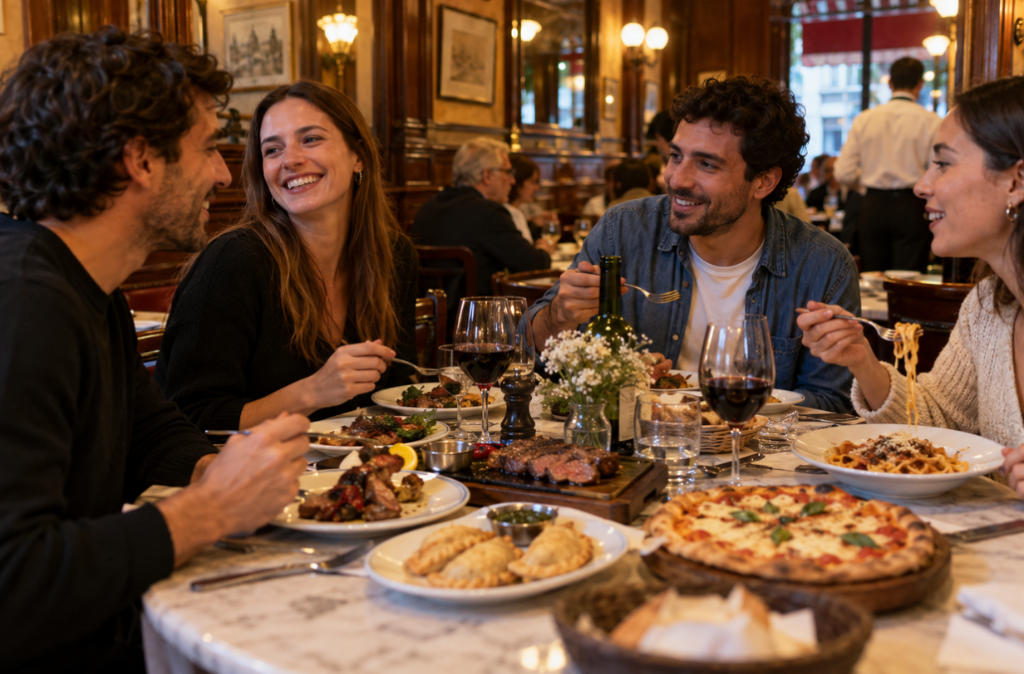
The asado is one of Argentina’s greatest symbols. But everyday cuisine goes far beyond meat. Pizza, empanadas, pasta, milanesas, ice cream, and many other culinary influences are part of what people eat every day.
When people think of Argentine food, asado often comes to mind first.
That makes sense.
Meat plays an important role in the country’s culinary culture.
But focusing solely on that leaves out a great deal.
Do people in Argentina eat meat every day?
No.
Some people eat meat often, while others don’t.
Everyday meals are much more varied.
Buenos Aires, in particular, has a culinary mix strongly shaped by different waves of immigration and local customs.
Asado is important, but it’s not the only thing.
Asado holds a special place.
It’s associated with gatherings, weekends, and shared moments.
But it also coexists with other classics.
Pizza porteña
Pizza from Buenos Aires has its own identity.
Lots of mozzarella, a thicker crust, and classic flavors like fugazzeta or Neapolitan.
And it’s often served with fainá.
Empanadas
They’re convenient, popular, and come in many varieties.
Beef, chicken, ham and cheese, and many other options.
They’re perfect for a quick meal or for sharing.
Pasta and milanesas
The Italian influence is also strongly felt at the table.
Pasta, gnocchi, and milanesas are staples of many family meals and restaurants.
Ice Cream and Coffee
Artisanal ice cream plays a huge role in the city.
And coffee is also part of the daily rhythm.
Breakfast, an afternoon snack, or a break during a walk.
If you want to explore this further, you can read our article on must-try foods in Buenos Aires.
Are there vegetarian options?
Yes.
Buenos Aires has an ever-growing selection of vegetarian and vegan options, as well as meat-free choices on traditional menus.
You don’t have to eat meat to experience the local cuisine.
So, is the myth false?
Yes, if taken literally.
Meat is important.
But Argentine and Buenos Aires cuisine is much more diverse.
And that’s exactly what makes it so interesting.